Mechanics Before Marketing
Tooling a crank that turns with the wheels costs more than moulding a block that only looks like an engine. Most vehicle builds here carry the moving version, which is where the engineering budget went.
A brick-based mechanical model kit brand building Technic-style vehicles, engines, and trains for adult and teen hobbyists.
Bricks that aren't LEGO deserve a hard look, so scroll back through the listing dates: the record starts in 2019, when Nifeliz Group began shipping Technic-style sets out of Guangdong, China. Line the ratings up seven years on and the spread shows plainly: 4.3 on the Abrams-X Tank, 4.6 on the Stinger RS Sports Car. Jump to the fears section on the home page and the reasons behind that 0.3-star gap sit there by model.
You get mechanics that move, not a glued display shell. Roll a finished car forward on your desk and its pistons stroke off the wheel axle, because the drivetrain is geared rather than decorative. Every carton arrives sorted into numbered bags with storage boxes and a manual, so a 2,000-piece build breaks into evening sessions instead of one long weekend.
Thread an axle into these ABS bricks and it seats to standard Technic-style pin dimensions; on most vehicle builds the engine then turns off that same wheel axle. Trace that axle line through any vehicle build here and it ends at moving pistons, not a moulded block.
One verified review of the Big Boy Locomotive put the hesitation plainly: apprehensive about buying building blocks that aren't LEGO, then 1,818 pieces and about 4 hours later, convinced enough to say so in writing. Search every listing for a published warranty period and nothing comes back, not in any year since 2019. Cover comes from the retailer's return window instead, so count the bags against the parts list the evening the carton lands, not the weekend you start building.
The range grew outward from vehicles. Trains came first and still carry the deepest review record, with 1,292 verified buyers behind the 1,818-piece Big Boy Locomotive alone. Supercars followed and now hold the piece-count ceiling at 4,099. Bare display engines arrived last: the Turbofan skips body panels entirely so the gear train stays in view while a hand crank drives it, and the V8 sits open on a desk at 2,725 pieces. Model years on current listings run 2023 through 2026, which is the honest span of what you can order today.
What has not changed across those years is where the engineering budget goes. Tooling a crank that turns with the wheels costs more than moulding a block that only looks like an engine, and most vehicle builds here carry the moving version. Printed gauges replace peel-prone decals on the instrument clusters. Electroplated trim goes on the parts that catch light two winters into a display shelf rather than two weeks.
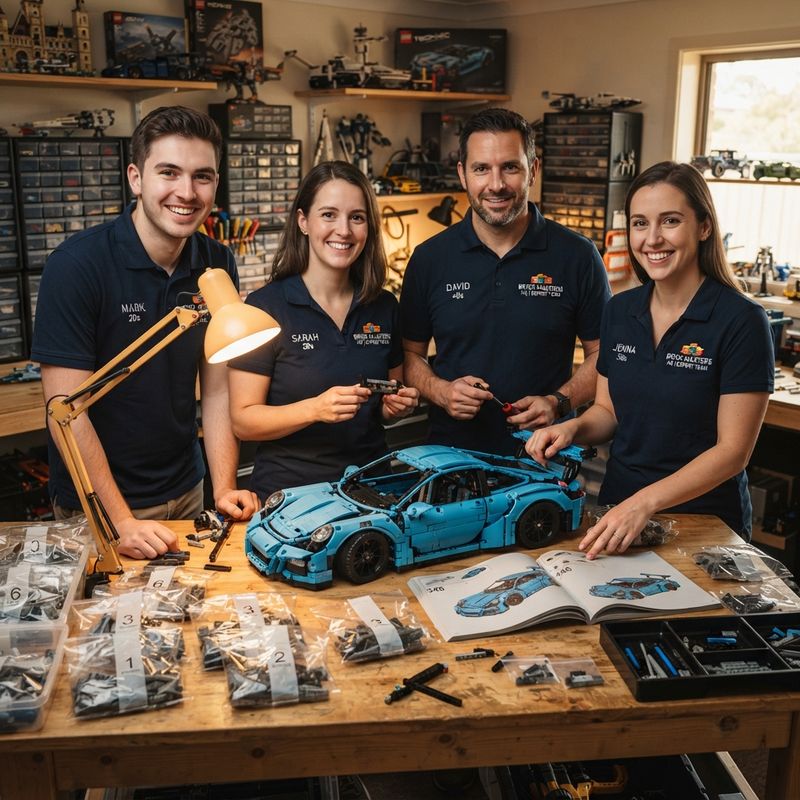
Precision mechanics, honest tier pricing, published part counts, and collector-grade finish decide what ships in a 4,099-piece carton.
Tooling a crank that turns with the wheels costs more than moulding a block that only looks like an engine. Most vehicle builds here carry the moving version, which is where the engineering budget went.
Comparable-scale premium Technic kits sit a tier above these on the same listing pages while the piece counts stay in the same 572 to 4,099 band. Lower marketing spend carries most of that gap.
Every carton states its parts count, its box count, and its build hours on the listing rather than inside the manual. Guesswork lands on the seller instead of the builder.
Electroplated engine parts and printed gauges replace peel-prone decals on most builds, which is what a model needs two winters into a display shelf rather than two weeks.
Every figure below comes off the current listings or the buyer reviews under them.